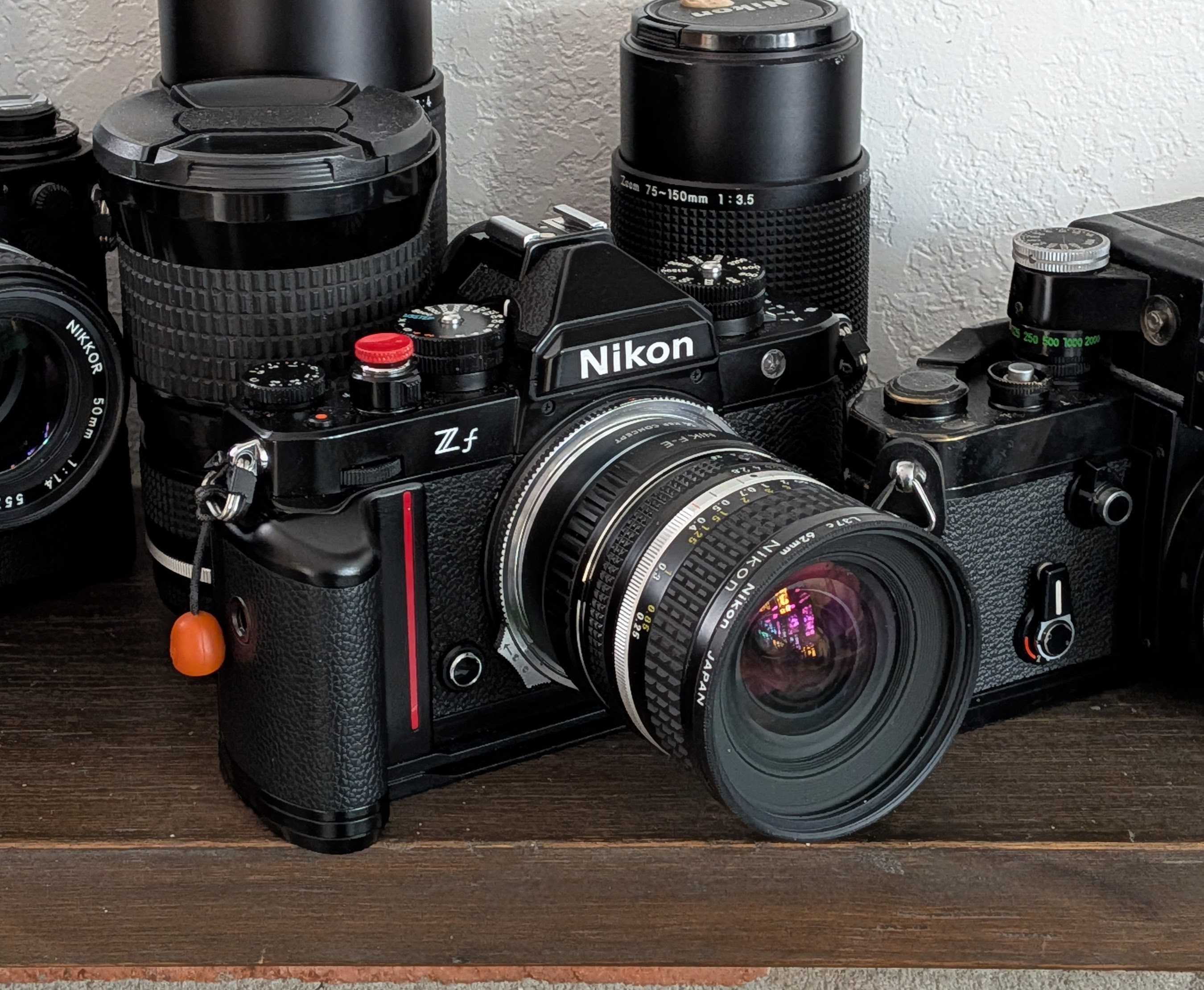
The Nikon Zf: A Love Letter to Nostalgia Photography
After ten digital Nikons spanning two decades, I finally made the leap to mirrorless. Not because I had to, but because the Zf made me want to.
My D850 was—and still is—a magnificent camera. For years, I watched the mirrorless revolution with interest but without urgency. The technology was impressive, but something wasn’t quite right. The experience felt clinical, disconnected from the tactile pleasure that drew me to photography in the first place. So I waited.
The Zf is what I was waiting for.
Not a Retro Camera, a Right Camera
Yes, it looks like a classic film body. Yes, it has dials and a mechanical aesthetic that harkens back to the FM2 and F3. But the Zf isn’t cosplay—it’s a thoroughly modern full-frame camera that happens to understand that good design was good design fifty years ago too.
The 24-megapixel sensor delivers beautiful files with excellent dynamic range. The in-body stabilization is outstanding. The autofocus is fast and accurate when you want it. This is a modern camera with modern capabilities.
What makes it special is that it doesn’t force you to shoot like it’s modern.
The Value Proposition Nobody Talks About
Let’s address the price: the Zf body sits at around $2,000. In the context of professional full-frame mirrorless cameras, that’s remarkably reasonable. The Z8 and Z9 cost significantly more. Sony’s flagship bodies command premium prices. The Zf delivers professional image quality and build at what feels like an enthusiast price point.
But here’s where the real value reveals itself: this camera becomes more valuable when you step outside the modern lens ecosystem.
Nostalgia Photography: Slowing Down to See More
I’ve started thinking of what I do with the Zf as “nostalgia photography”—not because I’m chasing some imagined golden age, but because the camera naturally pulls me toward a more contemplative way of working.
The Zf feels fundamentally different in my hands with a manual focus lens mounted. The experience transforms. The viewfinder becomes a meditation on focus peaking and depth. The aperture ring clicks with purpose. The focus ring has actual weight and meaning. You slow down. You look harder. You see more.
This isn’t about making photography deliberately difficult—it’s about making it deliberately intentional.
Old Glass, New Life
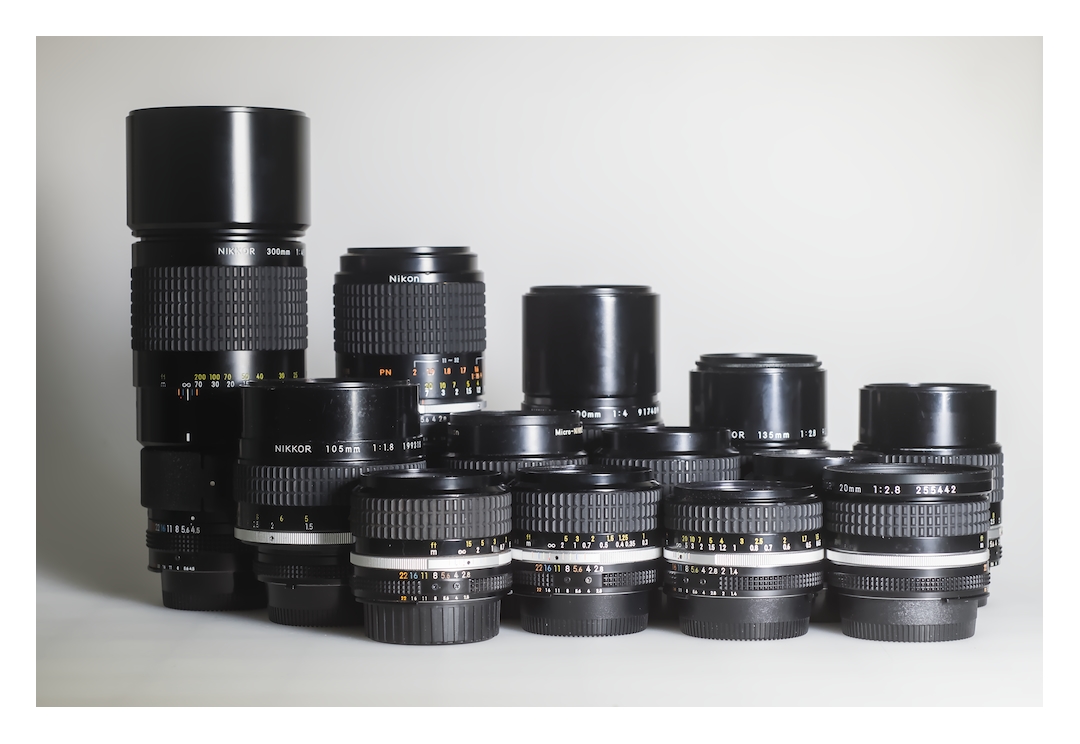
Every AI-S Nikon lens I own—and I’ve collected a few over the years—works beautifully on the Zf. With the right adapter(s) , these lenses find new purpose and new life. The camera body (with the right adapters) provides focus confirmation, offering better performance fron these old lenses than ever before.
My 50mm f/1.4 that cost me $70 produces images on the Zf that would make people guess it was a $500 lens. The 28mm f/2 AI-S finally has a body that makes the most of its compact, brilliant optical formula.
These weren’t “budget” lenses when they were made—they were practical tools built to exacting standards. On the Zf, they’re revelations.
The Voigtlander Discovery
Then there are the Voigtlanders.
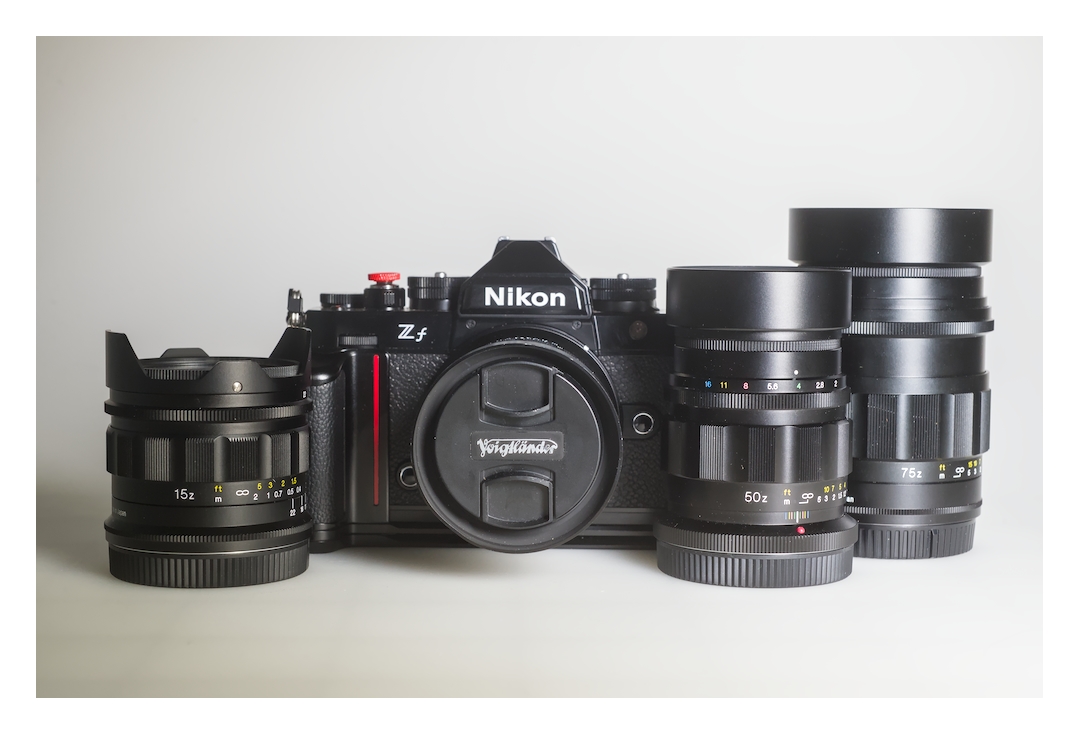
If you haven’t explored Voigtlander’s Z-mount offerings, you’re missing something special. These lenses bridge the impossible: they deliver modern optical performance with classic mechanical feel. They’re compact, beautifully made, and priced in a way that makes building a collection feasible rather than aspirational.
I no longer even know which is my favorite. They focus smoothly. They render beautifully. They feel right on the Zf in a way that’s hard to articulate but impossible to miss once you’ve experienced it.
Modern lens technology, classic lens philosophy.
A Lifetime of Nikon
I’ve been shooting Nikon my entire photographic life. Film bodies, digital bodies, professional bodies, enthusiast bodies—I’ve owned and used them all. Each one taught me something. Each one had its strengths.
The Zf is the best camera I’ve ever owned.
Not because it has the highest resolution or the fastest burst rate or the most sophisticated autofocus tracking. Those metrics matter, but they’re not what makes a camera special.
The Zf is special because it makes me want to photograph. It makes me want to explore. It makes me want to dig through lens catalogs and adapter specs and focal length possibilities. It reminds me why I fell in love with photography in the first place.
The Mirrorless Moment
I waited for mirrorless to be ready. The D850 with which I shot much of my Studio work was too good to abandon for incremental improvements or compromised ergonomics. I needed mirrorless to offer something genuinely different, genuinely better, genuinely compelling.
The Zf is all three.
The electronic viewfinder shows me exactly what my exposure will look like before I press the shutter. Focus peaking makes manual focus lenses a joy rather than a challenge. The compact body makes carrying vintage glass practical. The dials and controls make adjusting settings tactile and immediate.
It’s not that mirrorless technology finally caught up—it’s that Nikon finally made a mirrorless camera that understood what photographers like me actually wanted.
Something Very Special
There’s a quality to the Zf that’s difficult to quantify but easy to feel. It’s in the way the shutter sounds—substantial without being loud. It’s in the way the body fits your hand—solid without being heavy. It’s in the way the dials click—precise without being stiff.
It’s in the way the camera disappears when you’re shooting and reappears when you need to change something.
This is what special feels like. Not specs on a page, but experience in your hands.
Conclusion: The Camera I Didn’t Know I Needed
The Zf isn’t for everyone. If you need blazing burst rates or bird-tracking autofocus or maximum resolution, there are better tools for those jobs.
But if you want a full-frame camera that respects the past while embracing the present, that works beautifully with vintage glass while delivering modern performance, that encourages intentional photography while providing all the automation you might need—the Zf might be exactly what you’re looking for.
It was exactly what I needed. I just didn’t know it until I held one.
Ten digital Nikons later, I’ve finally found the one that makes all the others make sense. The journey led here, and here is exactly right.
Welcome to nostalgia photography. The light is beautiful.